Mode of Action Team News
-
IRAC Holds its 60th International Meeting in Cambridge, UK
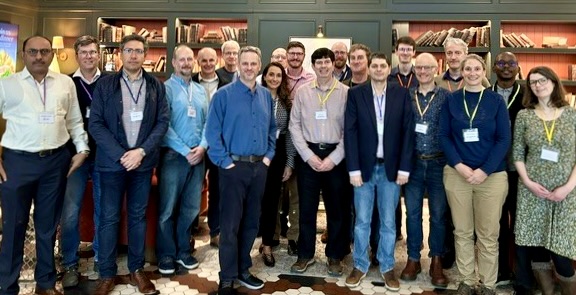
The Insecticide Resistance Action Committee (IRAC) International held its 60th Meeting from April 14–17, 2026, in Cambridge, United Kingdom. Representatives from member companies, regional groups, and Working Groups came together to review progress, discuss emerging resistance management challenges, and define strategic priorities for the years ahead.
The meeting opened with a strategic session focused on IRAC’s vision beyond 2026 and the future development of a global resistance database. Participants reviewed recent achievements, explored approaches to improving resistance monitoring and information sharing, and discussed how resistance data can be made more accessible and valuable to stakeholders worldwide. The programme also featured expert perspectives on the application of molecular biology and emerging technologies to support insect resistance management.
A key focus of the second day was a workshop examining the role of low-dose insecticides and their implications for insect resistance management (IRM). Discussions explored regulatory and technical considerations, the relationship between dose and resistance selection, and the opportunities and risks associated with low-dose approaches and emerging insect control traits. The workshop provided an opportunity for participants to exchange perspectives and consider future IRAC guidance in this area.
The third day addressed resistance management communication and stakeholder engagement. Topics included insecticide resistance labeling initiatives, resistance risk assessment approaches, updates from IRAC Working Groups and regional committees, and discussions on strengthening collaboration between IRAC and public-sector partners involved in resistance management.
The meeting concluded with an Executive Committee session focused on IRAC’s organisational priorities, resource allocation, and future strategic direction. Discussions included opportunities for enhanced collaboration across Resistance Action Committees (RACs), digital resource development, resistance database initiatives, and the continued delivery of practical tools and guidance to support sustainable insecticide use worldwide.
Presentations, meeting notes, and supporting materials are available to IRAC members when logged into the website.
-
Latest updates to the MoA Classification (version 11.5)
The updated resources, available for download from the IRAC website, are:
-
Latest updates to the MoA Classification (version 11.3)
Nonanoic acid has been added to MoA Group UNE (Botanical essence including synthetic, extracts and unrefined oils with unknown or uncertain MoA)
The updated resources, available for download from the IRAC website, are:
-
Pest MoA Posters Updated to correspond with the latest MoA Classification
The updated posters using the information from the latest version of the MoA Classification (Version 11.2, January 2025) and covering Lepidoptera, Sucking Pests, Mites, and Mosquitoes can be downloaded using the embedded links
-
Latest updates to the MoA Classification (version 11.2)
New versions (11.2, August 2024) of the IRAC MoA resources have been released and posted on the website. The changes include the following updates:
- Group 37: A new MoA Group which has been named “Vesicular acetylcholine transporter (VAChT) inhibitors”.
- Group 37: Oxazosulfyl has been moved from Group UN to the new Group 37.
- Group UNE: Sabadilla Extract has been classified as “Botanical essence including synthetic, extracts and unrefined oils with unknown or uncertain MoA”
- Group UNM: Polydimethylsiloxane (PDMS) has been classified as “Non-specific mechanical and physical disruptors”
- Group 35: Vadescana has been classified as “RNA Interference mediated target suppressor” in the MoA Classification under Appendix 6 as pending registration.
- Group UNM: Perlite has been classified as a “Non-specific mechanical and physical disruptor” in the MoA Classification under Appendix 6 as pending registration.
The updated resources, available for download from the IRAC website, are:
-
New versions (11.1, January 2024) of the IRAC MoA classification and associated resources have just been released and posted on the website.
The Changes include the following updates:
Group 4E Nicotinic acetylcholine receptor (nAChR) competitive modulators – New Active: Fenmezoditiaz
Group 23: Inhibitors of acetyl-CoA carboxylase – New Active: Spidoxamat.
Group 35 RNA Interference mediated target suppressors New Group and Active: Ledprona
Group UNF Fungal agents of unknown or uncertain MoA New Fungal Agent added: Akanthomyces muscarius Ve6Resources:
-
Latest updates to the MoA Classification
New versions (10.5, March 2023) of the IRAC MoA resources have just been released and posted on the website. The changes include the following updates:
- Group 29: Renamed to “Chordotonal organ nicotinamidase inhibitors”.
- Group 36: A new MoA Group which contains the active Dimpropyridaz, and is named “Chordotonal organ modulators – undefined target site”.
- Dicloromezotiaz, previously, in Appendix 6 (active ingredient pending registration), has been moved to Group 4E, Mesoinics, within Group 4, “Nicotinic acetylcholine receptor (nAChR) competitive modulators”.
- The new peptide, U1-AGTX-Ta1b-QA, has been classified as “Unknown or uncertain MoA – subgroup UNP (peptides of unknown or uncertain MoA)” and has been added to the Classification Scheme, Appendix 6, pending registration.
The updated resources, available for download from the IRAC website, are:
-
New IRAC, HRAC and FRAC Global Resistance Management Mode of Action App
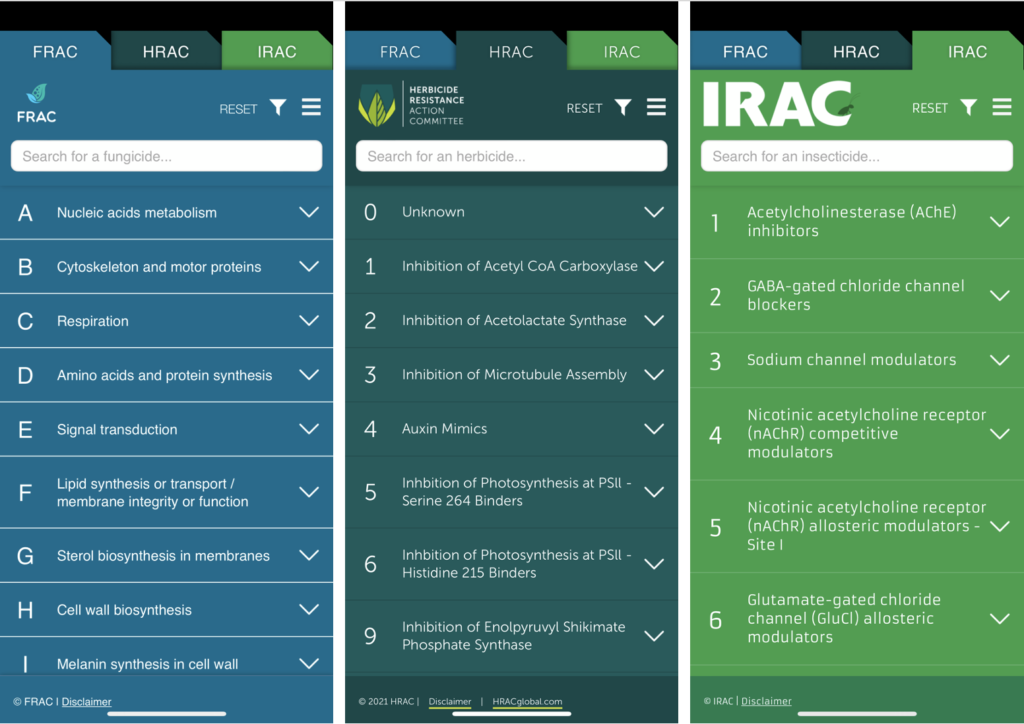
The new Global Resistance Management (GRM) Mode of Action App, released earlier this year by the Resistance Action Committees (IRAC, HRAC FRAC), has just been updated with additional features. The App combines the information on the Resistance Action Committee’s standalone Mode of Action Apps into one application for ease of access by the user. The individual IRAC, FRAC and HRAC Mode of Action Apps are still available and all applications can be downloaded from the Apple App and Google Play stores.
-
Latest MOA Classification Update
The latest edition of the scheme, version 10.3, has now been published which includes some minor changes to the earlier versions.
Download the latest Mode of Action Classification.
-
Updated MoA Resources now published in Japanese
The updated Japanese translated versions of the IRAC MoA Classification Scheme, the Classification Table, the MoA Poster showing the chemical structures, the Procedure for classification of new actives and MoA labeling advice has now been posted on the website with links on the Japan and MoA landing pages.