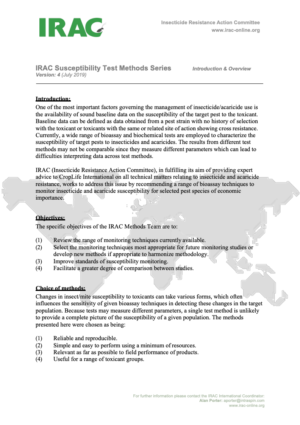
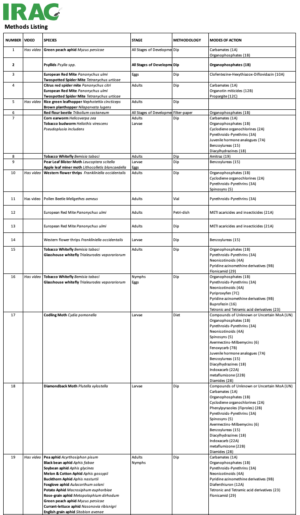
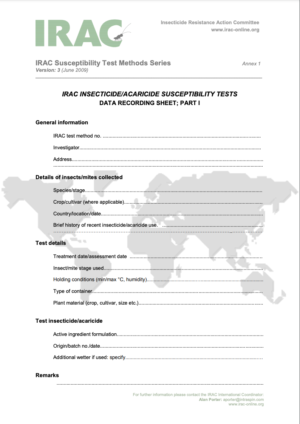
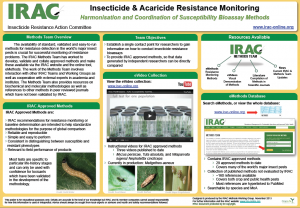
The availability of standard, validated and easy-to-run methods for resistance detection in the world’s major insect pests is crucial for successful monitoring of resistance problems. The IRAC Methods Team has worked to develop, validate and collate approved methods and make these available via the IRAC website and the online tool, eMethods. The work of the Methods Team involves interaction with other IRAC Teams and Working Groups as well as cooperation with external experts in academia and institutes. The Methods Team also has the objective to make available biochemical and molecular methodologies as well as references to other methods in peer reviewed journals which have not been validated by IRAC.
A search of available IRAC Methods can be carried out using the filter on the right hand side and a list of all the methods (IRAC and references) can be found using the link in the same green box which takes you to the eMethods tool. Videos of the more popular methods are gradually being developed and those available can be viewed via the links below.
Team Objectives:
- Establish single contact point for insecticide and acaricide resistance monitoring methods
- (core activities)
- To provide IRAC approved methods, so that data generated by independent researchers can be directly compared
- Improve communication to our target audience (promotional activities)